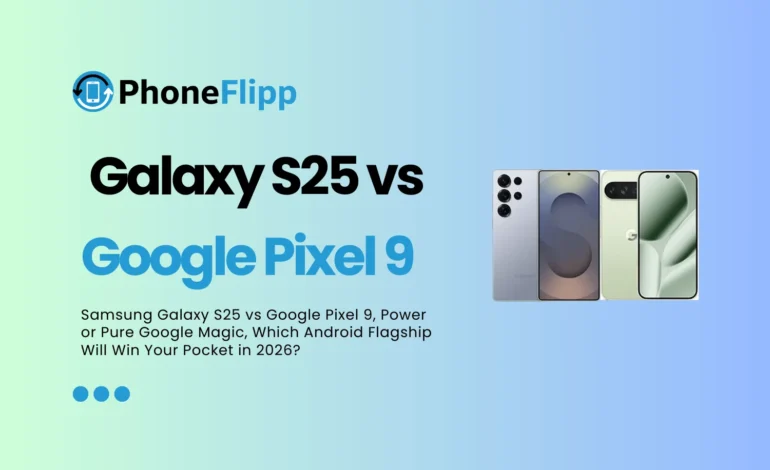
Samsung Galaxy S25 vs Google Pixel 9: Which Phone Wins

The Samsung Galaxy S25 and Google Pixel 9 are two of the most important Android flagship comparison phones of 2026, both targeting users who want powerful but compact flagship phones rather than huge Ultra/Pro devices. With similar prices, strong specs, and 7 years of updates, the “better phone” depends on what you value more: raw performance, camera style, software experience, or regional pricing.
Below is a deep, spec-driven breakdown including size, display, performance (Snapdragon 8 Elite vs Google Tensor G4), battery life, cameras, audio, durability, software, and value comparisons, plus where the Google Pixel 9 Pro XL fits if you’re willing to go bigger.
Design, Size & Weight Differences: Compact Flagship Phones
Both phones are marketed as compact flagship phones, but the Galaxy is physically smaller and lighter, while the Pixel feels denser and more substantial in hand.
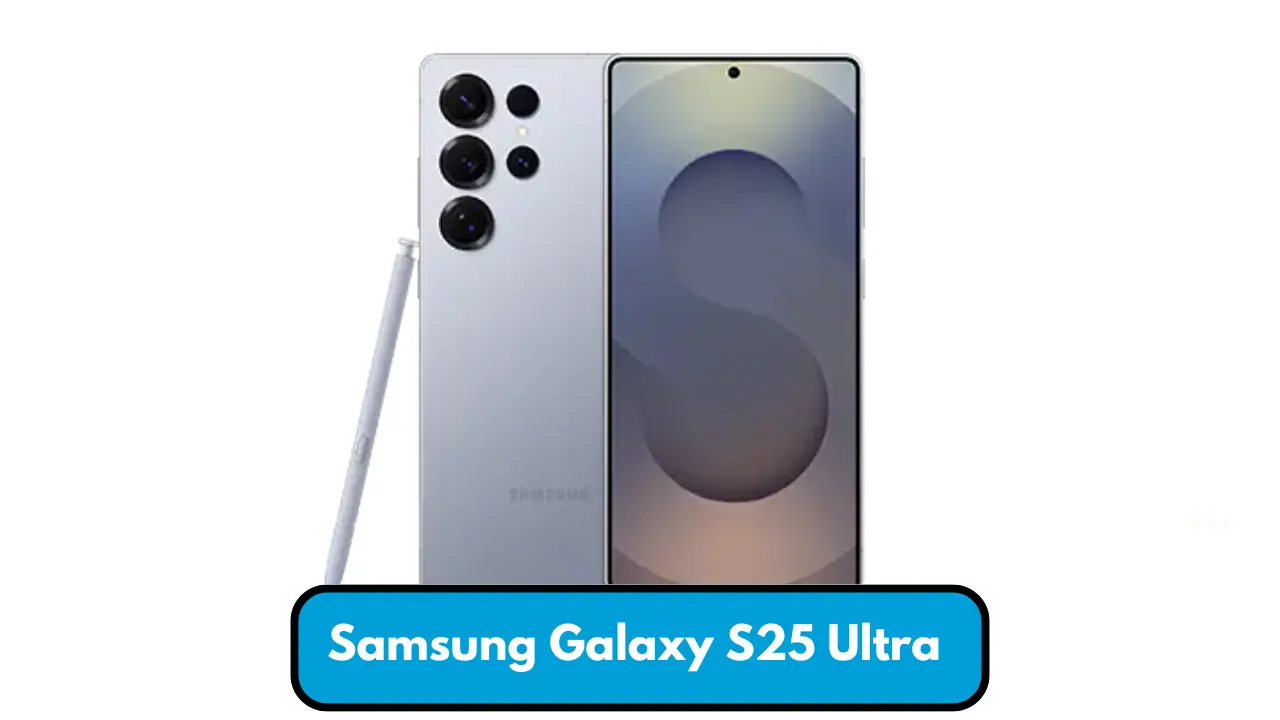
Samsung Galaxy S25
- Approx. 6.2-inch body, very slim and light (around 162 g).
- Minimal camera rings on the back, simple Samsung design language.
- Aluminum frame, Gorilla Glass Victus 2, IP68 water/dust resistance.
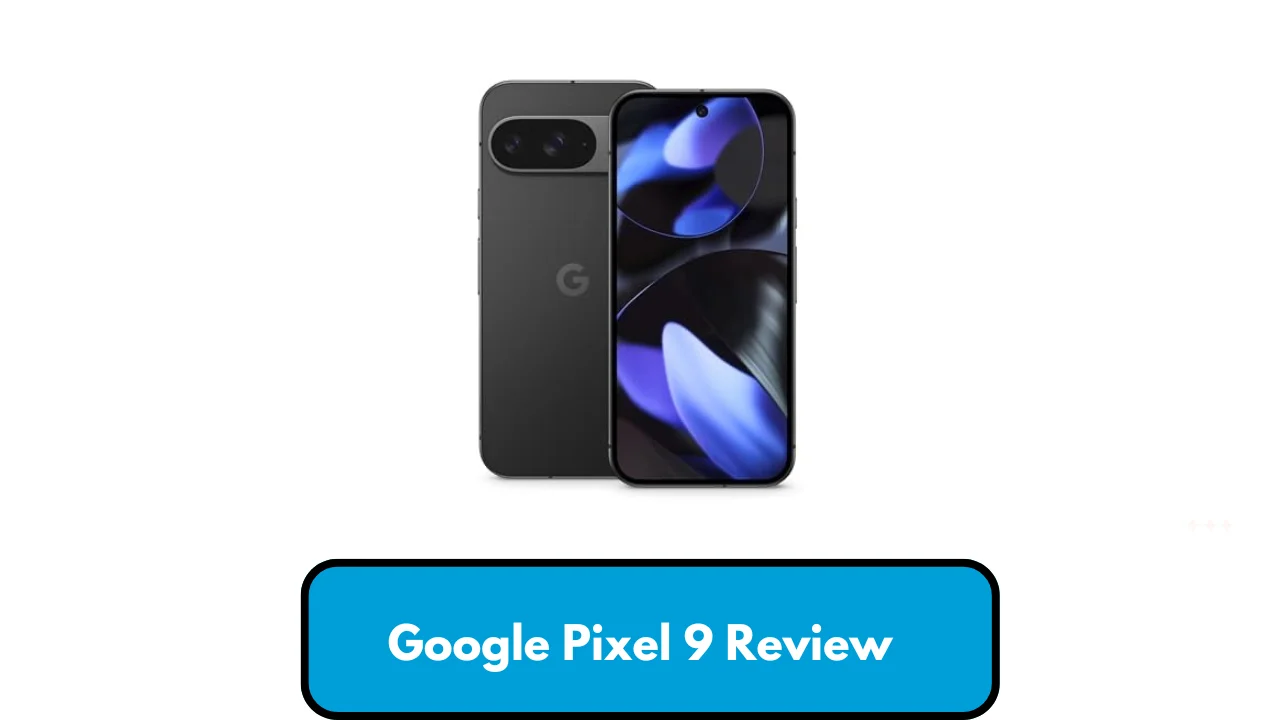
Google Pixel 9
- Slightly larger and heavier (about 198 g) with a 6.3-inch body.
- Signature Pixel camera bar/pill design for strong visual identity.
- Aluminum frame, Gorilla Glass Victus 2, IP68 water/dust resistance as well.
In hand, the Galaxy S25 feels more “compact flagship,” easier one-handed and pocket-friendly; the Pixel 9 feels more solid and hefty, which some users actually prefer.
Winner for size & weight differences:
- Want the smallest, lightest? Samsung Galaxy S25.
- Want a bit of heft and presence? Google Pixel 9.
Display: Screen Size, Panel Tech, Refresh Rate & Brightness
All three phones, Samsung Galaxy S25, Google Pixel 9, and Google Pixel 9 Pro XL, are strong on displays but prioritize different things: efficiency, brightness, and size.
Screen Size (6.2″ / 6.3″ / 6.8″)
- Galaxy S25: 6.2″ display.
- Pixel 9: 6.3″ display.
- Pixel 9 Pro XL: around 6.8″ display (larger “big flagship” class).
Panel Type: Dynamic LTPO AMOLED / OLED
- Galaxy S25: Dynamic LTPO AMOLED with 1–120Hz refresh rate, offering adaptive refresh for better power efficiency.
- Pixel 9: OLED at 120Hz, but not LTPO; it still feels smooth but is less power-optimized.
- Pixel 9 Pro XL: premium LTPO OLED (1–120Hz) similar to higher-end models.
Refresh Rate, Resolution & Brightness
- All three support 120Hz refresh rate, with 1–120Hz on LTPO panels (Galaxy S25, Pixel 9 Pro XL).
- Resolution is broadly 1080p+ on S25 and Pixel 9; Pro XL typical QHD+ or higher-density 1440p-class.
Brightness:
- Pixel 9 reaches around 2,200 nits peak, one of the brightest OLEDs tested.
- Galaxy S25 peaks around 1,400 nits, bright enough outdoors, but behind the Pixel 9.
Both the Galaxy S25 and Pixel 9 offer a flat display and thin bezels; the S25 has the higher screen-to-body ratio thanks to slimmer borders.
Winner for screen:
- For brightness and legibility in harsh light: Google Pixel 9.
- For efficiency and smooth LTPO tech in a compact body: Samsung Galaxy S25.
- For big-screen media: Google Pixel 9 Pro XL.
Performance: Snapdragon 8 Elite vs Google Tensor G4
This is where the Android flagship comparison becomes more one-sided. The Snapdragon 8 Elite (Galaxy S25) delivers significantly higher benchmark performance than the Google Tensor G4 (Pixel 9 & Pixel 9 Pro XL).
Chipset, RAM, Storage
- Samsung Galaxy S25
- Chipset: Snapdragon 8 Elite for Galaxy, 3 nm, overclocked “for Galaxy” variant.
- RAM / storage options: 12 GB RAM standard; 128/256/512 GB storage depending on region.
- Storage tech: UFS 4.0 on 256/512 GB variants (faster read/write, more efficient).
- Google Pixel 9 / Google Pixel 9 Pro XL
- Chipset: Google Tensor G4, 4 nm, optimized for AI and camera pipelines.
- RAM / storage options: 12 GB RAM with 128 or 256 GB storage on Pixel 9; higher options on Pixel 9 Pro XL.
- Storage tech: UFS 3.1 storage, still fast, but slower than UFS 4.0; affects app load times and large file transfers,
Benchmark Performance & Chipset Efficiency & Speed
Measured benchmarks (AnTuTu / Geekbench) show the Galaxy S25 is roughly 2× as powerful as the Pixel 9 in synthetic tests. That translates into:
- Faster high-refresh gaming (120Hz titles).
- Better sustained performance in heavy workloads.
- Faster processing for photo/video exports and large downloads.
The Tensor G4 is less about raw speed and more about on-device AI, voice, and image processing. It’s still smooth in day-to-day use, but if you push the phone with gaming or long 4K recording sessions, the Galaxy S25 has clear headroom.
Winner for performance:
- Samsung Galaxy S25 (and S25-based models) clearly win on raw performance and faster UFS 4.0 vs UFS 3.1 storage.
- Pixel 9 and Google Pixel 9 Pro XL still fine for everyday tasks; better integrated AI features thanks to Google Tensor G4.
Battery Capacity, Charging Speeds & Battery Life
Battery is more nuanced, because capacity, efficiency, and actual tests don’t always line up exactly.
Battery Capacity (4,000 / 4,700 / 5,060 mAh)
Approximate capacities based on current data:
- Galaxy S25: 4,000 mAh
- Pixel 9: 4,700 mAh
- Pixel 9 Pro XL: around 5,060 mAh
On paper, Google’s phones win the battery capacity (4,000 / 4,700 / 5,060 mAh) race.
Charging Speeds (Wired, Wireless) & Charging Tech
- Galaxy S25
- Wired: around 25W.
- Wireless: standard fast wireless; supports Qi / wireless charging.
- Full charge in ~77 minutes during tests, slightly faster overall than Pixel 9.
- Pixel 9
- Wired: about 27W.
- Wireless: Qi-compatible wireless charging.
- Full charge in ~85 minutes, slightly slower despite higher wattage, likely due to tuning.
Both are objectively slower than many Chinese flagships offering 45–100W; neither excels here.
Battery Life Comparisons & Power Efficiency
Independent testing shows battery life comparisons are closer than the capacities suggest:
- Pixel 9 does better in web browsing and some mixed usage.
- Galaxy S25 edges ahead in video playback and gaming tests, showing good power efficiency of the Snapdragon + LTPO screen.
- Overall battery life is similar: both comfortably all-day for most users.
Winner for battery:
- Want a bigger buffer and heavier use on a single charge? Slight edge to Google Pixel 9 and especially Google Pixel 9 Pro XL (5,060 mAh).
- Want more efficient gaming/video? Slight edge to Samsung Galaxy S25 thanks to chipset and panel efficiency.
Cameras: Hardware vs Computational Photography
Samsung and Google take different camera philosophies: Samsung leans on versatile hardware (including optical / periscope telephoto zoom on higher models), while Google leans heavily on computational photo quality & HDR and low-light performance.
Camera Hardware Overview
- Samsung Galaxy S25
- Main camera megapixels: ~50 MP primary sensor.
- Ultrawide sensor: 12 MP ultrawide.
- Telephoto: 10 MP 3x optical telephoto zoom (not periscope, but true optical).
- Selfie camera: 12 MP with autofocus.
- Google Pixel 9
- Main camera megapixels: 50 MP main sensor.
- Ultrawide sensor: 48 MP ultrawide with autofocus (excellent detail).
- No dedicated telephoto; uses sensor crop for 2x/3x.
- Selfie camera: 10.5 MP with autofocus.
- Google Pixel 9 Pro XL
- Similar 50 MP main + high-res ultrawide.
- Adds proper telephoto/periscope (e.g., 5x optical), improving long-range zoom.
Photo Quality & HDR
From side-by-side comparisons:
- Daylight, main camera:
- Pixel 9 photos are typically cleaner, less oversharpened, with wider dynamic range and excellent HDR tuning; shadows are better preserved.
- Galaxy S25 is sharp and vibrant, but can look more processed.
- Ultrawide:
- Pixel 9’s 48 MP ultrawide captures noticeably more detail both day and night; AF on ultrawide helps close-up shots.
- Galaxy S25’s 12 MP ultrawide is decent but less detailed, especially in low-light performance.
- Zoom:
- At 2x–3x in daylight, Galaxy S25’s dedicated 3x optical telephoto zoom wins with cleaner, sharper details.
- At 2x–3x at night, Pixel 9 can actually match or beat the S25 in some scenes because it crops from a bigger, brighter main sensor and applies aggressive Night Sight processing.
- Selfie camera:
- S25 selfies are a bit sharper and more detailed.
- Pixel 9 selfies have more lively color and softer processing.
Overall, Pixel 9 is arguably the better still-photo shooter for most people, especially if you like Google’s contrasty, cinematic processing and top-tier HDR. The Galaxy S25 wins if you need true optical zoom versatility and more natural-looking video across focal lengths.
Video Quality
- Pixel 9 produces better main-camera 4K video (exposure, dynamic range, sharpness, color) from the 1x camera.
- Galaxy S25 produces better video at 0.6x, 2x, 3x (wider detail and less processed look), helped by the dedicated telephoto.
Winner for cameras:
- Photography (still photos, ultrawide, HDR, low light): Google Pixel 9.
- Zoom flexibility, telephoto, multi-focal 4K video: Samsung Galaxy S25.
- Need top-tier zoom and Pro XL features? Consider Google Pixel 9 Pro XL.
Audio, Connectivity & Durability
Both phones come with stereo speakers and flagship-level build.
Stereo Speakers
Testing shows:
- Pixel 9 is slightly louder overall.
- Galaxy S25 has better sound quality, fuller, warmer, more bass, less “tinny” sound.
IP68, Bluetooth, Other Hardware
- Both: IP68 water/dust resistance and Gorilla Glass Victus 2.
- Both: Modern Bluetooth version (5.x+) for hi-res wireless audio; exact minor sub-versions vary by region but both support modern codecs like AAC and aptX/LDAC on many markets.
On the hardware utility front, both give you NFC, 5G, Wi‑Fi 7 (or at least Wi‑Fi 6E depending on region), and in-display fingerprint readers typical for 2026 Android flagships.
Winner for audio & durability:
- Audio quality: Galaxy S25.
- Loudness: Pixel 9.
- Durability: basically a tie (both IP68 with strong glass).
Software & Updates: One UI vs Pixel Experience
Software & Updates
- Samsung Galaxy S25
- Ships with latest One UI (around One UI 7) on top of Android.
- Offers 7 years of software & security updates, matching Google’s promise.
- Heavily featured: deep customization, Samsung ecosystem (Watch, Buds, SmartThings).
- Google Pixel 9 / Pixel 9 Pro XL
- Ships with the clean Pixel Launcher, minimal bloat, first-in-line Android updates.
- Also promises 7 years of software & security updates.
- Often gets Google’s newest AI and system features first.
AI Features & Assistant
Both devices lean heavily into AI in 2026:
- Galaxy S25 includes Galaxy AI features, but many are backed by Google Gemini as the default assistant, blurring the line with Pixel on AI capabilities.
- Pixel 9 continues to push on-device AI: call screening, live translation, smart photo tools, and more tightly integrated Google Tensor G4 features.
Winner for software:
- Prefer a clean, fast Google-first feel and fastest Android releases? Google Pixel 9 / Pixel 9 Pro XL.
- Want maximum features, customization, and Samsung ecosystem perks? Samsung Galaxy S25.
Price, Similar Price Range & Value Comparisons
Both phones occupy a similar price range, at least in the US; differences appear regionally.
- US pricing:
- Samsung Galaxy S25: starts around $799 for 128 GB.
- Google Pixel 9: also around $799 at launch.
- Google Pixel 9 Pro XL: higher tier; typically $999+ depending on storage.
- Regional pricing differences:
- In Europe, Galaxy S25 is often slightly more expensive than Pixel 9 for equivalent storage.
- In some markets, carrier promotions favor Samsung; in others, Google runs strong trade-in deals.
Given that Pixel 9 can be cheaper in Europe and has stronger out-of-the-box photo performance and a brighter screen, it’s an excellent value comparison choice for camera-focused users. The Galaxy S25 justifies its price with twice the performance, better speakers, higher storage tiers, and UFS 4.0.
Winner on value:
- US, performance-focused, long-term power: Samsung Galaxy S25 offers more silicon and storage per dollar.
- Europe or camera-first users: Google Pixel 9 often delivers better value due to lower street prices and superb imaging.
- Willing to spend more for a big screen + telephoto? Google Pixel 9 Pro XL becomes a strong value in the “do-it-all” tier.
Quick Comparison Table
| Feature | Samsung Galaxy S25 | Google Pixel 9 | Google Pixel 9 Pro XL |
|---|---|---|---|
| Screen size | 6.2″ Dynamic LTPO AMOLED | 6.3″ OLED | ~6.8″ LTPO OLED |
| Refresh rate | 1–120Hz adaptive | 120Hz | 1–120Hz adaptive |
| Brightness | ~1,400 nits peak | ~2,200 nits peak | Very high (Pro-class) |
| Chipset | Snapdragon 8 Elite | Google Tensor G4 | Google Tensor G4 |
| Storage | Up to 512 GB, UFS 4.0 | Up to 256 GB, UFS 3.1 | Higher tiers, UFS 3.1 |
| Battery | 4,000 mAh | 4,700 mAh | ~5,060 mAh |
| Charging | 25W wired, Qi wireless | 27W wired, Qi wireless | Slightly faster wired |
| Main camera | 50 MP | 50 MP | 50 MP |
| Ultrawide | 12 MP | 48 MP AF | High-res ultrawide |
| Telephoto | 10 MP 3× optical | None (crop) | Periscope telephoto (e.g., 5×) |
| Speakers | Better quality, warmer | Louder, thinner | Similar to Pixel 9 |
| Software | One UI + Galaxy AI | Clean Pixel UI + AI | Same as Pixel 9 |
| Updates | 7 years | 7 years | 7 years |
| Launch price (US) | $799 | $799 | ~$999+ |
So, Which Phone Wins in 2026?
For a pure Android flagship comparison, the answer depends on your priorities:
- Choose Samsung Galaxy S25 if you want:
- Best-in-class chipset efficiency & speed with Snapdragon 8 Elite and higher benchmark performance.
- Faster UFS 4.0 vs UFS 3.1 storage on higher-capacity models.
- A more truly compact flagship phone with lighter size & weight differences.
- Better speaker quality and more natural zoom/video output.
- A feature-packed One UI experience and tight Samsung ecosystem integration.
- Choose Google Pixel 9 if you want:
- A brighter 6.3″ screen with outstanding resolution & brightness outdoors.
- Cleaner, more cinematic photo quality & HDR, especially from main and ultrawide cameras.
- A distinctive design and software that feels minimal, fast, and Google-first.
- Potentially better value comparison in regions like Europe due to lower pricing.
- Consider Google Pixel 9 Pro XL if you want:
- A larger 6.8″ flat display with LTPO and premium resolution.
- Telephoto/periscope zoom plus Google’s computational photography in one package.
- A do-it-all flagship that trades compactness for screen real estate and camera flexibility.
Conclusion:
In conclusion, the “winner” between the Samsung Galaxy S25 and Google Pixel 9 depends far more on your priorities than on any single spec sheet metric. The Galaxy S25 is the obvious choice if you care about raw performance, gaming, and future‑proof speed: the Snapdragon 8 Elite, faster UFS 4.0 storage on higher tiers, and efficient LTPO AMOLED screen give it a clear edge for power users who push their phones hard. It also offers better overall speaker quality, a genuinely compact and lightweight footprint, and more flexible zoom for both photos and video, making it a versatile, well‑rounded Android flagship that feels tuned for enthusiasts and multitaskers.
The Pixel 9, on the other hand, is the more compelling option if you prioritize camera quality, display brightness, and a clean, Google‑centric software experience. Its brighter OLED panel is easier to see outdoors, its ultrawide and main cameras deliver more natural‑looking still photos with exceptional HDR and low‑light results, and its minimalist UI plus first‑in‑line Android updates give you a very “pure” experience. In regions where pricing is slightly lower or promotions are aggressive, its value proposition becomes even stronger, and if you’re willing to go larger, the Pixel 9 Pro XL adds big‑screen immersion and telephoto versatility.
Both lineups now promise seven years of software and security updates and share core flagship traits like IP68, stereo speakers, wireless charging, and long all‑day battery life, so you’re not making a bad choice either way. If you want a small, fast, feature‑packed phone with top‑tier silicon and better zoom, the Samsung Galaxy S25 is the smarter buy.
If you want the best point‑and‑shoot photos, the brightest compact display, and a streamlined Android experience at a similar or slightly lower price, the Google Pixel 9 (or Pixel 9 Pro XL if you like big phones) will feel like the more satisfying daily driver.