Microsoft Surface Duo 3 Review: Dual-Screen Usability Explained

In 2025, Microsoft Surface Duo 3 enters a smartphone landscape dominated by foldable screens and multitasking powerhouses. With this iteration, Microsoft aims to blend Android flexibility with Surface-grade productivity, presenting what might be the most refined dual-screen experience yet. But does the Duo 3 finally deliver on its promise of seamless multitasking and innovation, or is it still a niche experiment for enthusiasts?
This comprehensive Microsoft Surface Duo 3 review explores its design, usability, features, performance, and dual-screen functionality, showing how far Microsoft has come in creating a truly smart, foldable device for productivity lovers.
The Evolution of the Surface Duo Line
Microsoft’s journey with foldables has been fascinating. The original Surface Duo launched with vision but lacked polish — it was more idea than execution. The Surface Duo 2 improved performance and added better cameras, yet still fell short of mainstream appeal.
The Microsoft Surface Duo 3, however, is different. It represents the culmination of Microsoft’s lessons in dual-screen usability. With improved hardware, refined hinges, and optimized software, it feels less like a tech prototype and more like a premium productivity device.
In short, the Duo 3 is Microsoft’s most confident attempt to redefine how we use smartphones for work, creativity, and everyday life.
Design & Build: A True Dual-Screen Marvel
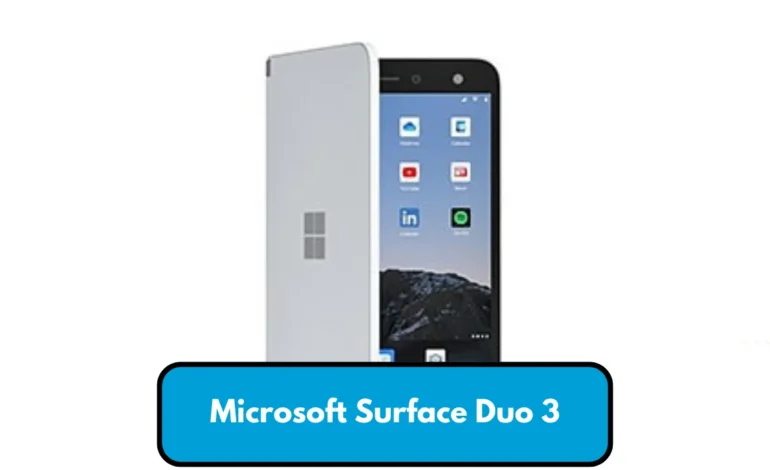
From the outside, the Surface Duo 3 design is a statement of precision. The new ultra-thin dual displays merge seamlessly when unfolded, creating a tablet-like workspace that’s both elegant and functional.
The hinge mechanism — a signature feature — has been re-engineered for greater durability and smoothness, allowing users to flip between modes effortlessly. Whether you’re taking notes with the Surface Pen, watching videos, or multitasking across two apps, the transition feels natural.
Unlike foldable phones with a flexible display, the Duo 3 maintains two distinct screens, preserving durability while enhancing productivity. It’s less about novelty and more about practical multitasking.
Dual-Screen Usability Explained
Here’s where the Microsoft Surface Duo 3 stands out from the competition. Each of its two screens functions independently — or together — giving users unmatched control over multitasking.
You can open Outlook on one display and Microsoft Teams on the other, or write notes while referencing a webpage. The dual-screen usability is driven by optimized Android software, ensuring fewer lags and better app management than previous models.
Microsoft’s partnership with Google for Android optimization has clearly paid off. Apps now remember screen orientation, and gestures have been redesigned for smoother transitions. This makes Microsoft Surface Duo 3’s dual-screen usability its strongest selling point yet.
Display & Visual Experience
The Duo 3 features dual 6.5-inch AMOLED displays with 120Hz refresh rates and HDR10+ support. Combined, they create a large, 8.3-inch virtual canvas perfect for streaming, sketching, and multitasking.
The color calibration and brightness levels are on par with flagship devices like the Samsung Galaxy Z Fold 6. Whether you’re editing photos, watching movies, or using design tools, the visual performance is crisp and vibrant.
Unlike foldables that suffer from visible creases, the Microsoft Surface Duo 3’s split display setup provides a clear viewing experience, making it a solid choice for creators and professionals.
Performance and Productivity
Powered by the Qualcomm Snapdragon 8 Gen 3 processor and backed by 12GB of RAM, the Microsoft Surface Duo 3 runs like a dream. App-switching is instant, and demanding software — like Photoshop Mobile or Microsoft 365 — performs without hiccups.
For professionals, the Surface ecosystem integration is a game-changer. Pair it with Surface Earbuds, Surface Laptop, or Surface Pen, and you have a cohesive productivity setup.
Multitasking with Android 14 for Surface feels fluid. The dual app mode and adaptive split-screen technology allow real-time collaboration and note-taking like never before.
Camera Performance: Surprisingly Strong
One of the biggest complaints about earlier models was the camera system. With the Microsoft Surface Duo 3, Microsoft finally catches up. It features a triple-lens setup: a 50MP main camera, a 12MP ultra-wide, and a 10MP telephoto sensor.
Images are sharp, colors are accurate, and low-light performance has significantly improved thanks to AI-driven image processing.
When used in dual-screen mode, one display can serve as a viewfinder, while the other allows real-time editing — perfect for content creators who need efficiency on the go.
Battery Life & Charging
Battery life has been a sticking point for dual-screen devices, but Microsoft’s optimizations pay off here too. The Surface Duo 3 offers up to 18 hours of active use thanks to a 5,000mAh dual-cell battery.
It supports 65W fast charging, 30W wireless charging, and reverse wireless charging — ideal for keeping accessories powered.
The inclusion of AI-based battery management also helps conserve power by adapting to user habits, giving it an edge over other dual-screen phones in endurance.
Software and Android Integration
The Microsoft Surface Duo 3 runs on a customized version of Android 14, fine-tuned for dual-screen operation. Microsoft’s launcher interface integrates tightly with its ecosystem, including Teams, OneNote, Outlook, and Edge.
This blend of Android flexibility and Windows familiarity creates an intuitive environment. Users can drag apps between screens, use split keyboard layouts, or even open multiple instances of the same app.
Additionally, the AI-powered Copilot integration brings smart task assistance, summarizing emails, organizing schedules, and optimizing multitasking flows — a major step toward intelligent productivity.
Surface Duo 3 vs Competitors
When compared with the Samsung Galaxy Z Fold 6 or Google Pixel Fold 2, the Surface Duo 3 holds its ground in several areas:
- Better multitasking flexibility with true dual displays
- Tighter integration with Microsoft Office and business apps
- Enhanced durability — no folding crease or delicate inner screen
- Superior note-taking and drawing compatibility with the Surface Pen
However, it still trails slightly in camera processing and third-party app optimization, which remain stronger on Samsung’s side.
The Dual-Screen Experience: Who Is It For?
The Surface Duo 3 isn’t for everyone. It’s a niche device designed for professionals, creators, and multitaskers who value productivity over entertainment.
If your daily workflow involves emails, meetings, note-taking, and document editing, the Microsoft Surface Duo 3 offers an unparalleled experience. For gamers or casual users, traditional smartphones may still feel more practical.
In short, this is a phone for thinkers and doers — not scrollers.
Pricing and Availability
The Microsoft Surface Duo 3 starts at $1,499 for the 256GB model, with 512GB and 1TB variants also available. It’s positioned as a premium productivity smartphone, rivaling the Z Fold 6 and Pixel Fold 2 in price and performance.
It’s currently available in select markets, including the U.S., U.K., and parts of Europe, with global expansion expected soon.
The Future of Microsoft’s Foldable Vision
The Microsoft Surface Duo 3 feels like a step toward something greater — a device that merges phone, tablet, and laptop roles into one fluid experience.
With Microsoft’s growing AI ecosystem, we can expect future versions to leverage generative AI tools, gesture-based interactions, and seamless Windows integration for even smarter workflows.
As dual-screen technology continues to mature, Microsoft’s persistence in this field could eventually reshape what “mobile productivity” means in the coming decade.
Conclusion: The Duo 3 Finally Delivers
The Microsoft Surface Duo 3 proves that dual-screen smartphones can be both practical and elegant. Its refined hinge design, optimized Android software, and powerful internals make it a legitimate productivity powerhouse.
While it’s not for everyone, it succeeds where its predecessors stumbled — delivering a true dual-screen usability experience that feels complete and reliable.
If you’ve ever dreamed of carrying a miniature Surface device in your pocket, the Microsoft Surface Duo 3 is exactly that. It’s not just a phone — it’s Microsoft’s most ambitious vision of mobile computing.