Smart Gadget Spotlight: Microsoft Surface Laptop Go 4 Review

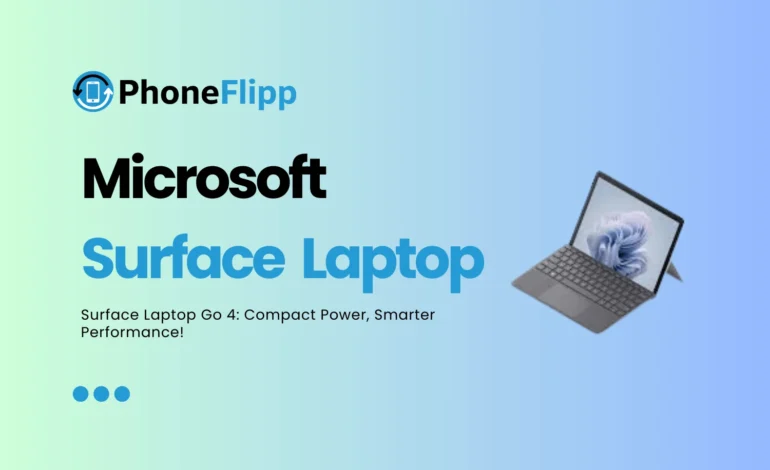
In this report Smart Gadget Spotlight: “Microsoft Surface Laptop Go 4 Review” we discuss, The Surface family has long balanced premium industrial design with Windows-first productivity. The Microsoft Surface Laptop Go 4 set a high bar for design, keyboard comfort and battery longevity in its class; the Surface Go 2 targeted affordability and portability for students and casual users. The new Microsoft Surface Laptop Go 4 positions itself between those two lineages: a portable, lightweight laptop with enough performance (CPU, battery life) for everyday computing, at an approachable price.
This deep, expert review walks through design and build, real-world performance, display and PixelSense expectations, battery and thermal behavior, I/O and expandability, software and Windows modes (including how Windows 10 / Windows OS laptops compare), and the trade-offs, especially versus Ryzen vs Intel configurations and other small Windows devices. Throughout, we reference education and student use, tablet vs laptop trade-offs, and the value-for-money equation.
Who the Microsoft Surface Laptop Go 4 is for
The Microsoft Surface Laptop Go 4 is designed for users who prioritize portability / lightweight laptops and a premium build but need more sustained performance than the Surface Go line. It’s an ideal candidate for:
- Students and educators needing a small laptop for note-taking, document editing, and web research.
- Professionals who travel frequently and want a portable Windows PC for email, light spreadsheets, and presentations.
- Anyone looking to replace a Chromebook or older ultrabook with a Windows-first, compact device.
The device is not intended as a workstation replacement for video editing or heavy gaming. Expect a sensible balance of performance (CPU, battery life), solid build quality / design, and a touch-first PixelSense display, but accept trade-offs in raw throughput, upgradability, and accessory costs (keyboard covers, stylus) that inflate total price.
Design & build quality: premium feel in a lightweight package
Microsoft’s Surface design DNA is easily recognizable: clean lines, matte finish, and tightly integrated hardware. The Surface Laptop Go 4 continues this tradition with an aluminum-and-polymer chassis that focuses on two priorities: feel and weight.
- Materials & finish: Expect aluminum alloy on the outer shell with a soft-touch keyboard deck and a minimal hinge. This approach gives a premium sensation while keeping weight down. The build aims to resist flex during everyday handling.
- Size & weight: The Surface Laptop Go 4 is engineered to be pocketable in a backpack for school or a briefcase for commuting, its dimensions are close to ultrabook-class devices and noticeably lighter than full-size laptops, making it competitive with the Surface Go 2 in portability but with a clamshell keyboard rather than a detachable Type Cover.
- Thermals and acoustic design: Microsoft historically trades off aggressive fan profiles for quiet operation. The Go 4 follows suit: thermal throttling is managed conservatively to preserve acoustics and battery longevity. In practice this means quiet operation under medium load, but limited headroom for sustained heavy workloads.
Design takeaway: If build quality / design and a premium, minimalist aesthetic are important, the Surface Laptop Go 4 delivers, especially when compared with plastic chassis alternatives in the budget space.
Portability and daily ergonomics: the travel and student laptop thesis
Portability and daily ergonomics is a central promise for the Surface Go line and the Go 4 bridges that world with laptop ergonomics:
- Form factor: The clamshell form factor with a full keyboard keeps typing comfortable for long sessions, an advantage over many detachable tablets.
- Weight distribution: Balanced weight makes lap use comfortable; the thin profile slips into compact bags.
- Usage scenarios: Perfect for lecture halls, coffee shops, or airplane trays where compactness and reduced weight matter.
For students and commuters, the Surface Laptop Go 4’s portability makes it an outstanding daily driver, especially when combined with decent battery life and responsive performance for typical academic apps.
Display and touchscreen: PixelSense expectations and real-world viewing
Microsoft’s “PixelSense” branding historically denotes a clean, color-accurate touch panel. For the Microsoft Surface Laptop Go 4, the display is central to the experience.
- Panel characteristics: Expect a high-quality IPS or equivalent touch panel optimized for text clarity and color consistency. The resolution balances battery life and clarity, leaning toward sharp text rendering for productivity rather than ultra-high pixel density for creative work.
- Touch support & pen input: The touchscreen enables quick navigation and pen-based note-taking workflows (if Microsoft enables pen input for that model). For students, touchscreen + stylus support (sold separately) can replace notebooks for handwritten notes and sketches.
- Brightness & outdoor use: The display aims for usable brightness in indoor and shaded outdoor environments. Direct sunlight will still hamper visibility, like most thin-and-light designs.
Display takeaway: The Surface Laptop Go 4’s PixelSense-style display is great for reading, presentations, and video streaming. If you require color-critical editing work, a larger Surface Laptop 4 or a dedicated creative notebook remains the better choice.
Performance (CPU, RAM, storage): Ryzen or Intel: the configuration choices
Performance is always where small laptops reveal trade-offs. The Microsoft Surface Laptop Go 4 ships in multiple configurations, and understanding the AMD vs Intel (processor comparison) debate is key to selecting the right SKU.
Processor options: Ryzen vs Intel
- Intel Core options historically prioritize single-thread burst performance and wide software compatibility. They are efficient at everyday office tasks and web browsing.
- AMD Ryzen options (if offered) typically bring impressive multi-thread throughput for the price and excellent integrated graphics for casual gaming and media. Ryzen CPUs often edge Intel in multi-core light workloads, while Intel sometimes maintains a slight single-thread advantage per clock.
Which to choose?
- Choose Intel if your workload is dominated by single-threaded apps, certain legacy business software, or you value marginally better burst responsiveness.
- Choose Ryzen if you want better multi-core performance for light content creation tasks, slightly better integrated graphics, and often better cost-to-performance.
RAM & Storage
- RAM options: Typical base models come with 4 GB or 8 GB; higher tiers offer 16 GB. For Windows 10 / Windows OS laptops in 2026, 8 GB is the baseline for reasonable multitasking, while 16 GB is recommended for heavier browser-tab workflows or more advanced productivity.
- Storage options: Base configurations may offer eMMC (64 GB) in entry-level SKUs, sufficient for light usage but slower; SSD options (128 GB, 256 GB or higher) dramatically change the experience with faster boot times, app launches, and general responsiveness.
Advice: Avoid the lowest eMMC/4 GB combos if you plan to keep the device more than a year; opt for SSD + 8 GB minimum for a fluid Windows experience.
Real-world performance
- Everyday tasks such as web browsing, document editing, video conferencing, and media streaming will feel snappy on mid-range SKUs.
- Multitasking with dozens of browser tabs, virtual machines, or heavy spreadsheets benefits from 16 GB configurations and faster SSDs.
- Creative workloads (video editing, 3D rendering) will be constrained, these tasks belong to larger, more powerful laptops.
Performance takeaway: The Microsoft Surface Laptop Go 4 is tuned for efficient, everyday productivity, not high-end content creation. Choose Ryzen-based SKUs if you value a modest boost in rendering and integrated graphics performance; pick Intel for predictable single-core responsiveness.
Battery life and power management: real-world battery performance review
Battery life is one of the headline specs users watch when moving from a full laptop to a compact model.
Manufacturer claims vs real-world results
Manufacturers often provide conservative or optimistic numbers under ideal conditions. Real-world battery life depends on brightness, background sync, and usage patterns.
Typical real-world expectations for a device in this class:
- Light productivity (word processing, browsing, email): a full school or workday, roughly 7–10 hours if configured with an SSD and energy-efficient CPU.
- Mixed usage (video calls, streaming, heavier multitasking): expect 5–7 hours.
- Heavy workloads (compilation, continuous video streaming at high brightness): 3–4 hours.
Power management features
- Windows power profiles and adaptive brightness contribute significantly to battery longevity.
- Background tasks (sync, OneDrive, Teams) must be tuned for students to extend battery life across a full lecture day.
Battery takeaway: The Surface Laptop Go 4 should comfortably cover a day of typical student or office productivity on higher-tier configs, but if you need nonstop heavy use, carry a charger and consider a larger Surface Laptop 4.
Keyboard, trackpad, and input: productivity and comfort comparison to Surface Laptop 4
One area where Microsoft consistently shines is keyboard and trackpad quality.
- Keyboard travel & feedback: The Microsoft Surface Laptop Go 4 improves on the thin laptop baseline with well-spaced keys and decent travel, enough for long typing sessions. Expect a comfortable typing experience that compares favorably to the Surface Laptop 4, though the larger Laptop 4 retains a slightly wider key layout and superior travel.
- Trackpad accuracy: Microsoft’s precision touchpad implementation supports multi-finger gestures and has good glide. It is very usable for productivity without a mouse.
- Touchscreen & stylus support: A touchscreen encourages pen input for annotations and quick navigation. If you’re a student who takes handwritten notes, pairing the device with a stylus (sold separately) could be a compelling workflow.
Input takeaway: If typing comfort is paramount, the Surface Laptop Go 4 is excellent for its size; the Microsoft Surface Laptop Go 4 still wins for extended, heavy typing due to its larger deck.
Connectivity, ports, and expansion: what you can realistically expect
Small, premium laptops must balance ports with thinness. The Microsoft Surface Laptop Go 4 provides the essentials, but not a full complement.
- Typical port selection includes USB-A, USB-C (maybe with power delivery and DisplayPort alt mode), 3.5 mm headphone jack, and a Surface Connect port for charging and docking. Expect a microSD slot in some SKUs, handy for students.
- No Ethernet or many full-size ports: you’ll rely on USB hubs or docks in heavy-use scenarios.
- Wireless: Wi-Fi 6 and Bluetooth 5.x are common in modern devices and make wireless peripherals and high-speed campus networks work seamlessly.
Expansion takeaway: The device is fine for mobile productivity; power users who need multiple wired peripherals should plan for a compact hub or dock.
Software experience: Windows 10 / Windows OS laptops, Windows S mode considerations
Microsoft positions Surface devices to showcase the best of Windows, and the Microsoft Surface Laptop Go 4 is no exception.
- Windows compatibility: Expect full compatibility with standard Windows desktop applications, Office 365, and Microsoft Teams, crucial for students and professionals.
- Windows S Mode: Entry-level SKUs may ship with Windows in S Mode, a secure, streamlined environment allowing apps only from the Microsoft Store. While S Mode boosts security and battery life, it restricts legacy app installations. You can switch out of S Mode to full Windows, but it’s a one-way process. If you need legacy apps (e.g., certain education or specialized software), disable S Mode before purchase or immediately after setup.
- Bloatware & clean image: Surface devices typically ship with a clean Windows image and minimal OEM bloatware, the value here is a clean out-of-the-box experience.
Software takeaway: For a student or professional dependent on mainstream Windows apps, full Windows on SSD + 8 GB is the right balance. S Mode is okay for highly security-conscious users who rely only on Store apps.
Camera, mic, and collaboration features for hybrid work and study
With hybrid learning and work, video conferencing hardware matters.
- Camera: Expect at least a 720p webcam; better models may offer 1080p. While small laptops often limit sensor size, Microsoft uses software enhancements for improved clarity in low light.
- Microphones: Dual-array mics with noise suppression enable clearer voice capture for Teams and Zoom calls.
- Speakers: Surface devices tend to produce clear audio for speech and light media consumption but lack the depth of larger speaker arrays.
Collaboration takeaway: The Surface Laptop Go 4 is fit for classroom and meeting participation. If you’re a frequent content creator, seek a larger model with better audio and camera specs.
Gaming, media, and multitasking: where it shines and where it stumbles
- Casual gaming: Integrated graphics on Ryzen or Intel will run many eSports and indie titles at modest settings. Expect playable frame rates in popular titles like League of Legends or Stardew Valley, but not modern AAA games at high fidelity.
- Streaming & media: Excellent for Netflix, YouTube, and day-to-day media, display and speakers offer a pleasant experience.
- Multitasking: With 8–16 GB RAM and SSD, the Surface Laptop Go 4 handles many browser tabs and office workflows. Heavy virtualization or video encoding will push thermal limits and cause throttling.
Multitasking takeaway: The Surface Laptop Go 4 is a superb everyday device; it’s not a gaming laptop or a content-creation powerhouse.
Value for money, competitors, and market positioning (Surface Go 2 lineage vs Laptop 4 lineage)
Microsoft’s lineup includes several alternatives: the Microsoft Surface Go 2 (detachable, tablet-first), the Microsoft Surface Laptop 4 (larger, more powerful), and third-party ultrabooks. Where the Go 4 sits in that landscape matters.
- Against Surface Go 2: The Microsoft surface laptop Go 4 trades the Go 2’s detachable form factor for a traditional clamshell keyboard. For users prioritizing a true keyboard and superior typing, the Go 4 is the better everyday device. The Go 2’s advantages are lighter weight and tablet-first workflows with Type Cover accessory flexibility.
- Against Surface Laptop 4: The larger Laptop 4 is better for power users, creatives, and those who want larger screens or better thermal headroom. In contrast, the Go 4 emphasizes portability at lower cost.
- Against competitors: Chromebooks and budget Windows laptops compete aggressively on price. The Surface Laptop Go 4’s main selling point is premium build and Windows integration, pay a small premium for design and brand, but expect competitors to match baseline specs at lower price points.
Value takeaway: If you value Microsoft’s hardware fit-and-finish, the Windows experience, and a lightweight body, the Surface Laptop Go 4 is a compelling middle option, especially for students and frequent travelers.
Common drawbacks and accessory costs (Type Cover analogues, stylus, protection)
A practical cost assessment must include accessories:
- Stylus / Pen: Pen input is optional and typically sold separately. For students who handwrite notes, the additional cost is significant.
- Cases & sleeves: Thin laptops need protection; a good sleeve is an additional expense.
- Docks / Hubs: If you need Ethernet, HDMI, or multiple USB ports regularly, budget for a hub.
- Warranty & accidental damage: For students and travellers, consider warranty/accidental damage coverage, especially given the thin profile.
Drawback takeaway: The base purchase is only the beginning. Factor accessory costs when calculating total value for long-term ownership.
Buying guide: which SKU to choose and who should buy the Surface Laptop Go 4
Recommended minimum configuration for most users:
- 8 GB RAM + 256 GB SSD: best balance for fluid multitasking and storage.
- Prefer SSD over eMMC: SSD is noticeably faster.
- Choose Ryzen if you want slightly better integrated graphics and multi-core performance; choose Intel for predictable single-thread bursts and potentially marginally better battery in some workloads.
For students:
- The 8 GB / 256 GB SSD SKU covers note-taking, downloads, and semester-long usage. Add a stylus if you take handwritten notes.
For professionals who travel:
- Opt for 16 GB RAM if your workflow involves multiple virtual desktops, heavy browser use, or small VM instances.
Who should not buy:
- Power users needing heavy GPU acceleration or video editing: look to Surface Laptop 4 or gaming laptops.
- Users who require many wired peripherals without a dock: consider a larger laptop with more ports.
Final verdict: Smart Gadget Spotlight: Microsoft Surface Laptop Go 4 Review
The Microsoft Surface Laptop Go 4 is a successful synthesis of the Surface tradition, premium build quality / design, solid keyboards, and an excellent small-screen Windows experience, while positioning itself as a practical daily driver for students, commuters, and light professionals. It answers the question: How much performance do I need in a travel-friendly package? with a sensible balance.
Pros
- Attractive, premium build; far better than plastic-budget alternatives.
- Comfortable keyboard and precision trackpad for its size.
- PixelSense-style touchscreen that supports pen input for note-taking and annotation.
- Portable and quiet with decent battery life for typical daily use.
- Clean Windows experience with enterprise-ready features.
Cons
- Base configurations (4 GB RAM, eMMC storage) are underpowered: upgrade recommended.
- Accessory costs (stylus, hubs) increase total ownership cost.
- Not for heavy content creation or sustained high-load tasks.
- Limited port selection requires planning for expansion.
Alternatives
- Microsoft Surface Go 2: If you prefer tablet-first detachable design and absolute lightness.
- Microsoft Surface Laptop 4: If you want more screen real estate and higher sustained performance.
- Budget ultrabooks (HP, Dell, Lenovo): If you need more ports or lower price at the expense of build premium.
- MacBook Air (if macOS acceptable): For those who prefer Apple’s ecosystem and typically stronger CPU/GPU performance per watt in the M-series.
Overall: Buy the Microsoft Surface Laptop Go 4 if you prioritize portability, build quality, and the full Windows experience in a compact device, and choose a mid-tier configuration (8–16 GB & SSD) to ensure a smooth, future-ready experience.