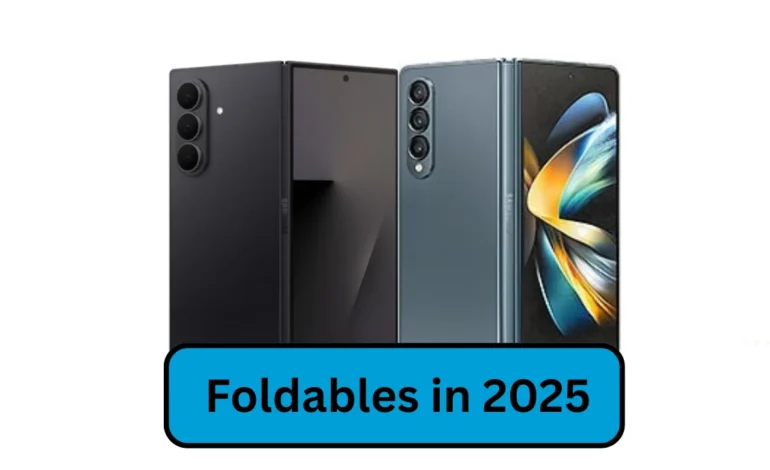
Foldables in 2025: Samsung Z Fold7 vs Oppo Find N4 – Which is Better?

The year 2025 marks a turning point for foldables phones. What was once a niche market for tech enthusiasts has now become a mainstream phenomenon. As manufacturers push the limits of design, innovation, and usability, two models stand out above all others the Samsung Galaxy Z Fold7 and the Oppo Find N4.
Both phones promise next-level experiences, merging cutting-edge hardware with intelligent AI integration. But when it comes to choosing the best foldable smartphone in 2025, which one truly leads? In this in-depth comparison, we break down every detail design, performance, camera, durability, battery life, software, and more to help you decide whether the Z Fold7 or the Find N4 deserves your pocket (and your investment).
The Evolution of Foldable Phones in 2025
Foldable technology has matured significantly since its experimental days. In 2025, foldables aren’t just fancy gadgets they’re powerful productivity tools, creative workstations, and entertainment hubs.
Brands like Samsung and Oppo have refined their approaches:
- Samsung focuses on premium engineering, long-term durability, and tight ecosystem integration.
- Oppo, on the other hand, emphasizes sleek design, compact builds, and intelligent AI-driven interfaces.
As a result, both the Samsung Z Fold7 and the Oppo Find N4 symbolize the future of foldable innovation one focused on muscle and longevity, the other on ergonomics and user experience.
Design & Display: Form Meets Function
Samsung Galaxy Z Fold7: Refining Perfection
Samsung’s Z Fold7 brings a sleeker hinge, a lighter frame, and an improved crease-free display. Its 7.9-inch Dynamic AMOLED 2X inner screen offers QHD+ resolution with a refresh rate of 120Hz, delivering vibrant visuals for gaming, streaming, and multitasking.
The outer display now feels more natural wider and less cramped, with Gorilla Armor Glass protection and IPX8 water resistance, continuing Samsung’s legacy of rugged refinement.
Oppo Find N4: Compact and Elegant
In contrast, Oppo’s Find N4 remains smaller and more compact, with a 7.1-inch AMOLED LTPO inner display and 1.5K resolution. It folds nearly flat, thanks to Oppo’s signature Flexion Hinge, making it one of the most comfortable foldables to carry and use one-handed.
Colors pop vividly on Oppo’s screen, and the crease is nearly invisible a huge win for users who prioritize aesthetics and seamless design.
Verdict:
- Z Fold7 wins in display size and productivity potential.
- Find N4 dominates in portability and comfort.
Performance & Power: Flagship Muscle
Under the Hood
Both devices are powered by the Snapdragon 8 Gen 4 chip the latest and most efficient processor in the Android world. However, Samsung optimizes its One UI Fold Edition for better multitasking, while Oppo’s ColorOS Fold focuses on intelligent app scaling and gesture controls.
The Z Fold7 offers 16GB of RAM and up to 1TB of storage, making it ideal for power users. The Find N4 slightly lags with 12GB RAM and 512GB storage, but its optimized software ensures a fluid experience.
AI Enhancements
In 2025, AI isn’t just a buzzword it’s deeply integrated. Both foldables feature AI-powered productivity tools such as:
- Real-time transcription during video calls
- Smart task automation
- On-device learning for battery and app management
Samsung leverages Galaxy AI, while Oppo introduces SmartFold AI, focusing on customization and adaptive layouts.
Verdict:
- Z Fold7 leads for power and multitasking.
- Find N4 shines in AI-driven usability and efficiency.
Camera Showdown: Folding Flagships with Big Lenses
Samsung Galaxy Z Fold7 Camera
Samsung maintains its triple-lens setup:
- Main: 200MP Wide
- Ultra-Wide: 12MP
- Telephoto: 10MP (3x optical zoom)
The Z Fold7 integrates AI photo optimization, Nightography Pro, and Director’s View for multi-camera shooting. It’s practically a pro-level camera rig in your pocket, capable of 8K video recording and real-time HDR rendering.
Oppo Find N4 Camera
Oppo continues its partnership with Hasselblad, offering a more natural color profile.
- Main: 50MP Sony LYT-808 sensor
- Ultra-Wide: 48MP
- Telephoto: 64MP (periscope 5x optical zoom)
The Find N4’s AI Scene Optimizer 3.0 intelligently enhances portraits, landscapes, and low-light shots with precision.
Verdict:
- Z Fold7 offers a pro-grade camera with better consistency.
- Find N4 provides artistic depth and more natural photography.
Battery Life & Charging: Powering the Fold
Battery life has always been a challenge for foldables, but both 2025 models make huge strides.
- Z Fold7: 5,000 mAh dual-cell battery, 45W fast charging, 15W wireless charging, and 10W reverse charging.
- Find N4: 4,800 mAh battery with 80W SUPERVOOC fast charging, reaching 100% in just 30 minutes.
Samsung wins for longevity and wireless options, while Oppo dominates charging speed.
Verdict:
- Power users → Samsung Z Fold7
- Quick chargers → Oppo Find N4
Software & Ecosystem Integration
Samsung’s One UI Fold 7.0 seamlessly integrates with Galaxy Buds, Watch, and Tab offering a cohesive experience within the Samsung ecosystem. DeX Mode now supports external monitors wirelessly, making it a mini laptop replacement.
Oppo’s ColorOS Fold 15, on the other hand, focuses on simplicity. It offers smart split-screen multitasking, floating windows, and gesture-based navigation for smooth handling.
Verdict:
- For ecosystem lovers → Samsung Z Fold7
- For minimalists and first-time foldable users → Oppo Find N4
Durability & Build Quality
Durability remains the biggest concern for foldables, but 2025’s innovations solve much of that:
- Samsung introduces FlexArmor Ultra, improving hinge strength by 20% and rated for 500,000 folds.
- Oppo enhances its Flexion Hinge 3.0, reducing stress and improving dust resistance.
Both feature Armor Aluminum frames and Gorilla Glass Victus 3. Samsung’s IPX8 certification still leads in water protection.
Verdict:
- Samsung Z Fold7 is tougher and more resistant.
- Oppo Find N4 is sleeker but slightly more fragile.
Price & Availability (U.S. Market)
- Samsung Z Fold7 – starts at $1,899 (U.S.)
- Oppo Find N4 – expected around $1,499 (U.S.), though limited release outside Asia.
Samsung continues to dominate global availability, including the U.S. market, while Oppo remains more region-specific.
Verdict:
If you’re in the U.S., the Z Fold7 is the easier and more supported option.
The Future of Foldable Smartphones
As foldable phones in 2025 evolve, they’re no longer luxury gadgets they’re defining the next generation of mobile computing. AI, camera intelligence, display durability, and sustainable materials are shaping the foldable phone revolution.
Expect more AI-powered multitasking, flexible app experiences, and integration with AR/VR tools as part of the foldable ecosystem in 2026 and beyond.
Final Verdict: Which Foldable Should You Buy?
After analyzing every aspect, here’s the conclusion:
| Category | Winner |
|---|---|
| Design & Portability | Oppo Find N4 |
| Display & Immersion | Samsung Z Fold7 |
| Performance & Power | Samsung Z Fold7 |
| Camera & Creativity | Oppo Find N4 |
| Battery & Charging | Oppo Find N4 |
| Software Ecosystem | Samsung Z Fold7 |
| Durability | Samsung Z Fold7 |
| Price & Accessibility | Oppo Find N4 |
Overall Winner: Samsung Galaxy Z Fold7
Samsung’s years of refinement, ecosystem depth, and unmatched durability make the Z Fold7 the most balanced foldable for U.S. consumers in 2025. However, if you crave compact design and fast charging, the Oppo Find N4 delivers incredible value.
Conclusion: The Foldable Future Is Here
Foldables are no longer futuristic concepts; they are reshaping how we work, create, and connect. The Samsung Galaxy Z Fold7 and Oppo Find N4 represent the best of what 2025 has to offer power meets precision, innovation meets imagination.
Whether you’re a multitasker, creator, or casual user, these foldables deliver laptop-grade performance in your pocket. The real question isn’t if foldables will replace traditional smartphones it’s when.