iPhone 16 Pro Max vs Galaxy S25 Ultra: Ultimate Flagship Battle

The Samsung Galaxy S25 Ultra and Apple iPhone 16 Pro Max are the two ultimate flagships of 2026, and the S25 Ultra vs iPhone 16 Pro Max comparison is the definitive flagship smartphone showdown for anyone who wants the very best phone money can buy. Both devices push cutting-edge displays, bleeding-edge chipsets, powerful camera systems, and long-term software support, but they take very different paths: Samsung leans into specs, AI, and S Pen productivity, while Apple doubles down on efficiency, ecosystem, and consistent camera output.
This deep-dive guide explores every angle, display, performance, cameras, battery, software, ecosystem, connectivity, and pricing tiers (256GB, 512GB, 1TB), to help you decide which flagship truly fits your needs in 2026.
Design, Build & Display: 6.9‑Inch Giant vs Apple’s Big Pro
Size, Materials & Screen-to-Body Ratio
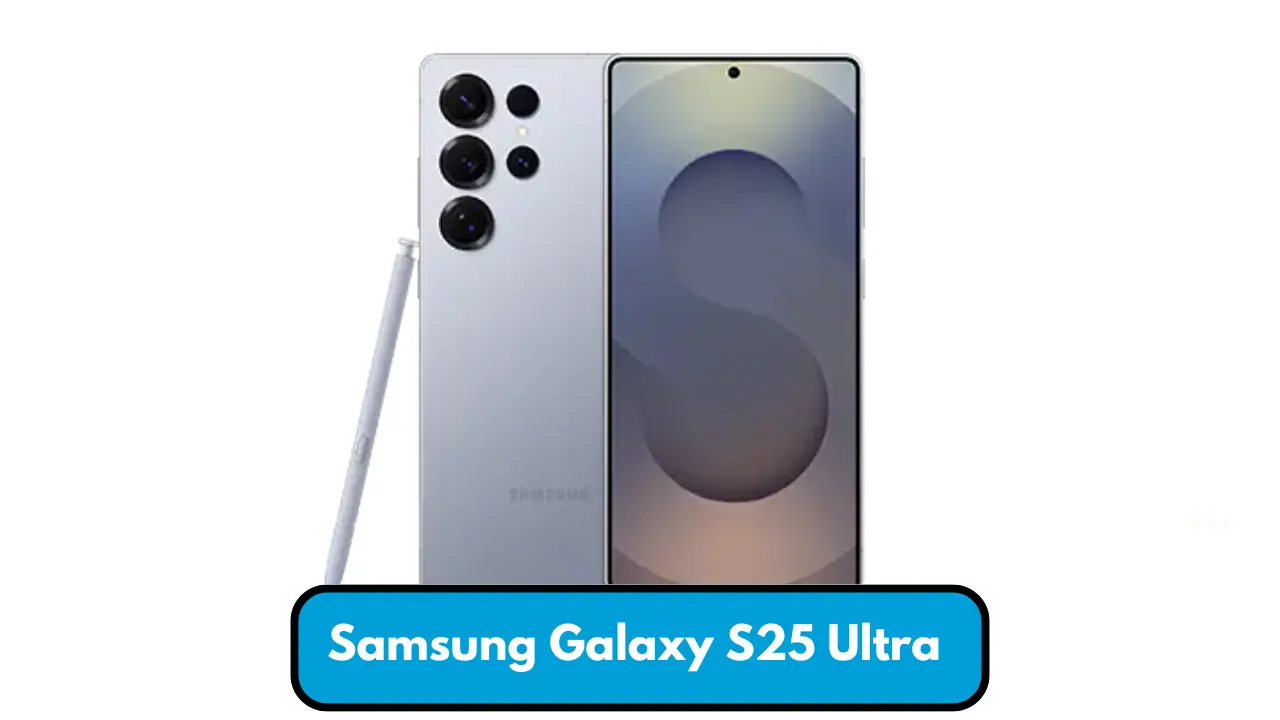
Both phones are large, premium slabs, but the Samsung Galaxy S25 Ultra pushes the “big phone” concept a little further with its 6.9-inch display, slightly larger than the iPhone’s panel.
- Samsung Galaxy S25 Ultra
- 6.9-inch display, almost note‑style rectangular design.
- Titanium frame, flat sides, and Samsung’s minimalist camera rings on the back.
- Corning Gorilla Glass Armor 2 on the front, Gorilla Glass Victus 2 on the rear.
- Very high screen-to-body ratio, with extremely thin bezels.
- Apple iPhone 16 Pro Max
- Slightly smaller display (around 6.7 inches), still firmly a big phone.
- Titanium frame with refined flat edges, similar to 15 Pro Max but more ergonomic.
- Front protected by Ceramic Shield, Apple’s custom glass-ceramic.
- Slightly thicker bezels than S25 Ultra, so lower screen-to-body ratio comparatively.
The S25 Ultra feels more like a productivity tablet in your pocket, while the iPhone 16 Pro Max feels like a refined, polished slab with slightly better ergonomics thanks to Apple’s rounded inner edges.
Dynamic AMOLED vs Super Retina XDR
On the display tech front, both are world-class, but with different strengths:
- Galaxy S25 Ultra
- Dynamic AMOLED 2X panel with LTPO, up to 120Hz adaptive.
- 1–120Hz refresh rate 120Hz, smoothly scaling down to save power.
- Uses Gorilla Glass Armor on the front, which is an anti-reflective, scratch-resistant glass-ceramic that drastically cuts glare.
- Peak brightness tested around 1,417 nits in auto mode, ~784 nits manual.
- iPhone 16 Pro Max
- Super Retina XDR OLED display, also 120Hz with ProMotion.
- Apple’s own LTPO implementation with dynamic refresh between 1–120Hz.
- Protected by Ceramic Shield front glass.
- Tested peak brightness around 1,796 nits in auto mode and ~900 nits manual, brighter than the S25 Ultra.
Although the Galaxy has slightly lower peak brightness, Gorilla Glass Armor’s anti-reflective properties mean it can appear more readable in direct sun than the raw nit numbers suggest, since reflections are heavily reduced. Still, if you care strictly about resolution & brightness (nits), the iPhone 16 Pro Max objectively wins on maximum brightness, while the S25 Ultra wins on glare reduction and reflectivity.
Display verdict:
- Want the largest 6.9-inch display, very high screen-to-body ratio, and less glare outdoors? Go Samsung Galaxy S25 Ultra.
- Want the brightest overall screen with superb HDR and color accuracy? Apple iPhone 16 Pro Max has a brightness edge.
Performance: Snapdragon 8 Elite for Galaxy vs Apple A18 Pro Chip
Under the hood, this matchup pits Snapdragon 8 Elite for Galaxy against the Apple A18 Pro chip, with different strengths in CPU vs GPU and AI.
RAM (12GB vs 8GB) & Storage Tech
- Samsung Galaxy S25 Ultra
- RAM: 12 GB across most configurations.
- Storage: 256GB / 512GB / 1TB; UFS 4.0, which offers very high read/write speeds and strong efficiency.
- Apple iPhone 16 Pro Max
- RAM: 8 GB (Apple traditionally uses less due to tight OS optimization).
- Storage: 256GB / 512GB / 1TB; NVMe‑class Apple storage, very fast and tightly integrated.
Although the iPhone has “only” 8 GB of RAM, iOS’s memory management means it rarely feels limited in real-world use, but power users who keep dozens of heavy apps open may appreciate the S25 Ultra’s 12 GB.
Benchmark Scores (Geekbench / 3DMark)
Benchmarks show an interesting split between CPU and GPU:
- According to comparative tests, Apple A18 Pro still has an advantage in Geekbench single-core CPU performance (about 10–15% higher), while Snapdragon 8 Elite is very competitive or slightly behind in multi-core, depending on the workload.
- In GPU and gaming tests like 3DMark Wild Life Extreme and Solar Bay, the Snapdragon 8 Elite for Galaxy often beats A18 Pro, delivering higher FPS and better sustained performance under heavy graphics load.
This means that for heavily threaded or GPU-intensive tasks, like high-end mobile gaming with ray tracing, the S25 Ultra may feel more powerful, while the iPhone 16 Pro Max maintains Apple’s usual dominance in single‑core and certain CPU-heavy tasks.
Gaming Performance & Thermals
- Galaxy S25 Ultra
- Excellent gaming performance with high sustained FPS in 3DMark and longer sessions.
- Larger chassis and better cooling allow it to sustain performance better in some titles.
- iPhone 16 Pro Max
- Plays top titles (Genshin, Call of Duty, etc.) smoothly at high settings, backed by Metal and Apple’s game ecosystem.
- A18 Pro can still throttle slightly under extended extreme load, but Apple’s optimization keeps most games smooth.
UI Comparison (Android 15 One UI 7 vs iOS 18)
- Galaxy S25 Ultra
- Runs Android 15 One UI 7, with Samsung’s extensive customization, multitasking features, and Galaxy AI tools.
- Offers split-screen, pop-up windows, S Pen integration, and deeper file system access.
- iPhone 16 Pro Max
- Runs iOS 18, which adds more customization than older iOS versions but stays simpler and more locked-down.
- Tight integration with Apple Silicon and apps leads to butter-smooth UI and animations.
Performance verdict:
- For raw GPU and multi-faceted gaming performance, plus heavier RAM multitasking, Samsung Galaxy S25 Ultra often has the edge.
- For single-core CPU tasks and ultra-polished app performance, Apple iPhone 16 Pro Max remains slightly ahead.
Cameras: 200MP vs 48MP, Zoom, and AI Imaging
This is one of the most interesting sections: Samsung pursues resolution and zoom (a 200MP main camera and multiple ultrawide & telephoto lenses), while Apple sticks with a 48MP camera but leans hard into consistency and video quality.
Camera Hardware
- Samsung Galaxy S25 Ultra
- 200MP main camera, capable of detailed crops and 16‑in‑1 pixel binning.
- Ultrawide lens with high resolution and good dynamic range.
- Multiple telephoto lenses: typically 3x and 5x optical zoom, giving it strong mid-to-long-range performance.
- Apple iPhone 16 Pro Max
- 48MP main camera, using pixel binning and different focal-length crops (1x, 2x).
- Ultrawide lens with 12MP or higher resolution.
- Telephoto: Apple’s improved 5x tetraprism or equivalent system for long-range zoom, but fewer dedicated telephoto modules overall versus Samsung.
Daylight, HDR & Detail
- S25 Ultra
- The 200MP main camera can resolve huge detail, especially when shooting in full-res or using crop zoom at 2x–4x.
- Samsung’s HDR tends to be punchy, with saturated colors and strong contrast.
- iPhone 16 Pro Max
- The iPhone 48MP camera prioritizes natural color science and consistent exposures.
- Apple’s HDR has improved compared to earlier controversial versions, giving more balanced highlights and shadows.
Low-Light Performance & AI Imaging Enhancements
- Low-light performance is strong on both:
- Galaxy S25 Ultra combines large sensor binning with aggressive multi-frame Night modes and AI imaging enhancements (scene optimization, detail enhancement).
- iPhone 16 Pro Max uses Apple’s Deep Fusion, Photonic Engine, and Night mode to capture stable, low-noise shots.
- For long-range zoom (5x, 10x):
- At 5x, tests show the S25 Ultra has a slight edge, especially in detail and clarity.
- At 10x, the S25 Ultra again tends to produce higher-quality images, leveraging its more telephoto-focused hardware.
Video
- Apple remains the gold standard in video recording:
- iPhone 16 Pro Max offers superb stabilization, natural color, reliable HDR video, and strong low-light video, making it ideal for creators.
- The S25 Ultra is very close with 8K options, strong OIS, and AI sharpening; Samsung continues to narrow the gap, but iPhone still feels slightly more consistent in complex lighting.
Camera verdict:
- Photo flexibility (especially zoom) and sheer resolution → Samsung Galaxy S25 Ultra.
- Video reliability and natural photo style → Apple iPhone 16 Pro Max.
Battery & Charging: 5,000 mAh vs 4,685 mAh
Battery Capacity and Endurance
- Galaxy S25 Ultra: 5,000 mAh battery.
- iPhone 16 Pro Max: 4,685 mAh battery.
Despite the smaller capacity, well-optimized iOS and the A18 Pro deliver excellent endurance. Some lab tests show the iPhone slightly ahead in overall battery life estimates, with around 8h 30m vs 8h for S25 Ultra in specific synthetic tests. Other endurance tests and video playback scenarios often show both phones lasting comfortably all day or more.
Wired Charging Speed (45W vs 25–30W)
Charging is where Samsung clearly wins:
- Galaxy S25 Ultra
- Supports up to 45W wired charging; real-world figures around 40W peak.
- In testing, charged from 0–100% in about 59 minutes.
- iPhone 16 Pro Max
- Apple quotes no wattage, but practically 25–30W max.
- 0–100% takes around 117 minutes, almost double the S25 Ultra.
At intermediate checkpoints (e.g., 30 or 50 minutes), the Galaxy also maintains a comfortable lead.
Wireless Charging Differences
- Both support wireless charging, but Apple also offers MagSafe‑style magnetic accessories, while Samsung supports Qi-based systems and its own ecosystem chargers.
- Neither offers the blazing 80–100W wireless speeds some Chinese phones do, but both are convenient for overnight top-ups.
Battery & charging verdict:
- For pure endurance, both are excellent; some tests favor the iPhone 16 Pro Max slightly, others show near parity.
- For charging speed, the Samsung Galaxy S25 Ultra is decisively superior, especially going from 0–100%.
Android vs iOS, Ecosystem & Update Support
Android vs iOS: UI and Everyday Experience
- Android 15 One UI 7 on S25 Ultra
- Highly customizable: themes, icon packs, layout tweaks, and rich multitasking.
- Better integration with Windows PCs (Link to Windows), DeX mode, and S Pen productivity.
- iOS 18 on iPhone 16 Pro Max
- Cleaner, more controlled environment with top-quality apps and tight optimization.
- Slightly less flexible, but extremely polished with consistent animations and behavior.
Ecosystem Features
- Apple iPhone 16 Pro Max ecosystem features
- AirDrop, FaceTime, iMessage, Handoff, Continuity Camera, AirPlay, seamless workflows if you use Mac, iPad, Apple Watch.
- Face ID for secure, convenient biometric security.
- Samsung Galaxy S25 Ultra ecosystem features
- One UI integrates with Galaxy AI, Galaxy Buds, Galaxy Watch, SmartThings, and Windows PCs.
- S Pen unlocks note-taking, drawing, remote camera shutter, and on-screen writing nowhere else available in this form.
- On Android, you also get flexible default apps, file transfers, and a broader range of system-level customization.
Update Support Longevity
Both brands have stepped up:
- Samsung Galaxy S25 Ultra: up to 7 years of OS and security updates, matching Google’s policy on Pixels and nearly matching Apple’s long-term practice.
- Apple iPhone 16 Pro Max: Apple typically supports devices for 6–7+ years of iOS updates; while not explicitly “7-year guaranteed,” historical support has been extremely long.
Software & ecosystem verdict:
- Already in Apple’s world? iPhone 16 Pro Max is a no-brainer for ecosystem synergy.
- Prefer customization, S Pen, and Galaxy AI plus broader device compatibility? Samsung Galaxy S25 Ultra is more flexible and feature-rich.
Pricing Tiers, Cost Comparison & Value Proposition
Both phones occupy similar premium brackets with multiple pricing tiers (256GB, 512GB, 1TB).
- Base storage (256GB) on both is usually around the same MSRP in the US flagship market.
- 512GB and 1TB tiers are expensive on both, but Apple often carries a slightly higher absolute dollar premium at the top-end, especially in some regions.
- Regional pricing differences matter: In some European and Asian markets, Samsung devices may be discounted or bundled more aggressively, while Apple holds its price longer.
Value proposition:
- If you want maximum hardware (display size, RAM 12GB, 5,000 mAh vs 4,685 mAh, faster charging, S Pen, powerful zoom cameras) for your money, Samsung Galaxy S25 Ultra arguably offers more tangible hardware value.
- If you value long-term resale, ecosystem stability, and creator-focused video performance, the Apple iPhone 16 Pro Max still delivers a compelling package, especially if you already own other Apple gear.
Connectivity, Security & Accessories
Connectivity (Wi‑Fi 7, Bluetooth, NFC)
Both phones are fully modern on connectivity:
- Galaxy S25 Ultra: Wi‑Fi 7, Bluetooth 5.x, full NFC support, 5G (mmWave/sub‑6 depending on region).
- iPhone 16 Pro Max: Wi‑Fi 7, Bluetooth 5.x, NFC (limited to Apple Pay & a few APIs), 5G with Apple’s usual strong modem integration.
Biometric Security (Fingerprint, Face ID)
- Galaxy S25 Ultra
- In-display ultrasonic fingerprint sensor.
- Face unlock (less secure 2D, but fast).
- iPhone 16 Pro Max
- Face ID, industry-leading 3D facial recognition.
- No fingerprint sensor.
Accessory Support (S Pen, Action Button)
- Galaxy S25 Ultra
- Built-in S Pen, still one of its defining features: pressure-sensitive, low-latency stylus integrated into the chassis.
- Ideal for note-taking, drawing, signing documents, and precise editing.
- iPhone 16 Pro Max
- Action Button for customizable shortcuts (camera, mute, shortcuts, accessibility), evolving what started in iPhone 15 Pro.
- Rich ecosystem of MagSafe accessories: wallets, stands, battery packs.
- Accessories and extras verdict:
- Need pen input and productivity? Samsung Galaxy S25 Ultra stands alone thanks to the S Pen.
- Prefer a powerful but simple hardware shortcut and MagSafe accessory ecosystem? iPhone 16 Pro Max delivers.
Final Verdict: Which Ultimate Flagship Wins?
In this iPhone 16 Pro Max vs Galaxy S25 Ultra: Ultimate Flagship Battle, there is no absolute winner, only a best choice for your priorities:
- Choose Samsung Galaxy S25 Ultra if you want:
- The largest 6.9-inch display with superb Dynamic AMOLED visuals and Gorilla Glass Armor’s anti-reflective toughness.
- A powerhouse Snapdragon 8 Elite for Galaxy with stellar GPU and gaming performance, plus RAM (12GB vs 8GB) for heavy multitasking.
- A feature-rich camera system with 200MP main camera, strong optical zoom (5x, 3x), and excellent zoom shots up to 10x.
- Bigger 5,000 mAh battery, much faster wired charging speed (45W vs 25–30W), and the productivity power of S Pen and One UI multitasking.
- Deep Android customization, Galaxy AI, and tighter integration with Windows and Samsung’s broader ecosystem.
- Choose Apple iPhone 16 Pro Max if you want:
- The brightest Super Retina XDR screen with higher resolution & brightness (nits) in direct comparisons.
- Class-leading single-core CPU performance with the Apple A18 Pro chip, ultra-polished app behavior, and top-tier iOS 18 experience.
- Exceptional video quality, natural photo style, and reliable low-light performance with the iPhone 48MP camera and Apple’s imaging pipeline.
- Slightly better overall battery life estimates in some tests, legendary long-term support, and the unbeatable Apple ecosystem with AirDrop, FaceTime, and Continuity.
- Face ID, Action Button, and seamless synergy if you already own a Mac, iPad, or Apple Watch.
If you’re an Android power user, creative professional who values the S Pen, or a spec‑driven buyer, the Samsung Galaxy S25 Ultra is the more compelling, feature-rich, and hardware-heavy choice in 2026. If you live inside Apple’s ecosystem, care deeply about video quality and consistency, and value long-term stability and integration over raw specs, the Apple iPhone 16 Pro Max remains the ultimate iOS flagship, and the better choice for you.