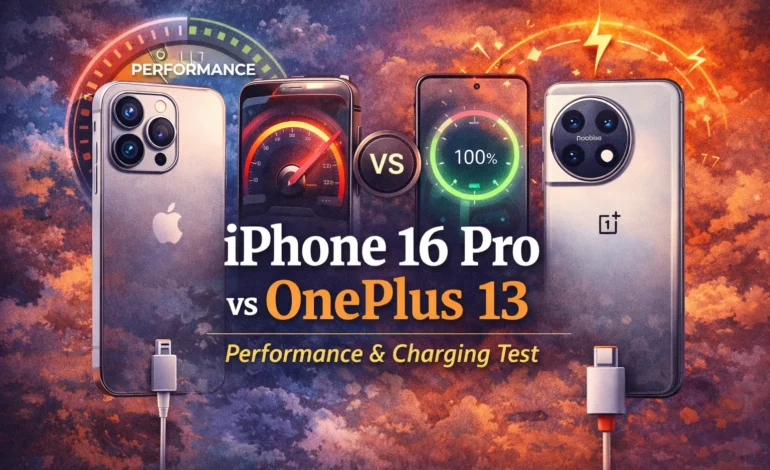
iPhone 16 Pro vs OnePlus 13: The Ultimate Performance & Charging Showdown

In the fiercely competitive world of flagship smartphones, two titans are poised to clash, each promising to redefine user expectations: the rumored iPhone 16 Pro and the highly anticipated OnePlus 13. For tech enthusiasts and everyday consumers alike, the perennial question revolves around which device truly delivers the best experience. This deep dive will dissect the core capabilities of both contenders, offering an in-depth iPhone 16 Pro vs OnePlus 13: Performance & Charging Test to help you make an informed decision. Are you ready to discover which phone might dominate the benchmark charts and recharge your day with unparalleled speed?
Unpacking the Raw Power: Performance Benchmarks and Real-World Speed
When it comes to raw processing power, both Apple and OnePlus push the boundaries of mobile technology. The iPhone 16 Pro is expected to house Apple’s next-generation silicon, likely the A18 Bionic chip. This chip is anticipated to build upon Apple’s already formidable lead in single-core and multi-core performance, leveraging an advanced fabrication process for superior efficiency and speed.
On the Android front, the OnePlus 13 is set to feature Qualcomm’s latest flagship processor, the Snapdragon 8 Gen 4. This chipset is rumored to introduce significant architectural changes, potentially closing the gap with Apple’s custom silicon. The competition between these two chipsets will be fascinating to observe, as it dictates everything from app launch times to intensive gaming experiences.
CPU Dominance: A18 Bionic vs. Snapdragon 8 Gen 4
The central processing unit (CPU) is the brain of any smartphone, handling most of the daily tasks. Apple’s A-series chips have consistently delivered industry-leading CPU performance, often outpacing their Android counterparts in synthetic benchmarks like Geekbench. The A18 Bionic in the iPhone 16 Pro is expected to continue this trend, offering unparalleled responsiveness for general use, complex computations, and AI-driven features.
The Snapdragon 8 Gen 4, however, is rumored to bring substantial improvements, possibly adopting a new core configuration and higher clock speeds. This could translate into a more competitive showing in multi-core tests and a noticeable boost in overall system fluidity for the OnePlus 13. We anticipate both phones will handle demanding applications with ease, but the nuances in their CPU architecture could lead to subtle differences in sustained performance.
GPU Prowess: Gaming and Graphics Rendering
For gamers and content creators, the graphics processing unit (GPU) is paramount. Apple’s integrated GPUs have always been incredibly powerful, optimized to work seamlessly with iOS and its Metal API. The iPhone 16 Pro’s A18 Bionic is expected to deliver significant gains in graphics rendering, offering smoother frame rates in the most graphically intensive mobile games and faster processing for video editing and augmented reality applications.
The Adreno GPU within the Snapdragon 8 Gen 4 in the OnePlus 13 is also projected to see substantial upgrades. Qualcomm has been steadily improving its graphics capabilities, aiming to provide a console-like gaming experience on mobile. We’ll be looking at how each device handles titles like Genshin Impact or Call of Duty Mobile at maximum settings, paying close attention to sustained performance without thermal throttling. The efficiency of heat dissipation will be a critical factor here, influencing how long each phone can maintain peak graphical output during extended gaming sessions.
RAM Management and Software Optimization
Beyond the raw silicon, how a device manages its memory (RAM) and optimizes its software plays a crucial role in overall performance. iOS on the iPhone 16 Pro is renowned for its efficient RAM management, often achieving superior multitasking and app retention with less physical RAM than Android devices. This tight integration between hardware and software ensures a consistently smooth user experience, even with numerous apps open in the background.
The OnePlus 13, running OxygenOS atop Android, typically offers more RAM (often 12GB or even 16GB in its top configurations). While Android has made significant strides in memory management, the sheer volume of RAM can sometimes compensate for less aggressive optimization. This allows users to keep more applications active simultaneously without frequent reloads. The efficiency of OxygenOS in leveraging the Snapdragon 8 Gen 4 will be key to its perceived speed and responsiveness, particularly for heavy multitaskers.
The Power Play: Charging Speeds and Battery Endurance
In our always-connected world, battery life and charging speed are just as critical as raw performance. Both the iPhone 16 Pro and the OnePlus 13 are expected to offer significant advancements in this area, albeit through different philosophies. Understanding these differences is crucial for anyone considering an upgrade.
Battery Capacity and Endurance
While specific battery capacities for these unreleased phones are speculative, trends suggest both will aim for improved endurance. Apple typically prioritizes efficiency to maximize battery life with relatively smaller cells, thanks to the A-series chip’s power management and iOS optimizations. The iPhone 16 Pro could see a modest bump in mAh, coupled with further efficiency gains from the A18 Bionic, leading to excellent all-day battery life for most users.
OnePlus, on the other hand, often equips its flagships with larger battery capacities to complement its powerful hardware and fast charging capabilities. The OnePlus 13 is likely to feature a substantial battery, potentially in the 5000 mAh range or even higher. This larger cell, combined with the power efficiency improvements of the Snapdragon 8 Gen 4, could position the OnePlus 13 as a battery endurance champion, especially for users who push their devices hard throughout the day.
Wired Charging: Speed Demons and Efficiency
This is where the starkest contrast often appears. OnePlus has long been a leader in ultra-fast wired charging, with its SuperVOOC technology delivering astonishing speeds. The OnePlus 13 is expected to continue this tradition, potentially offering 100W or even higher charging speeds. This could mean a full charge from 0 to 100% in under 30 minutes, a game-changer for users who need quick top-ups throughout their busy schedules.
Apple, while improving, has historically taken a more conservative approach to wired charging speeds. The iPhone 16 Pro is anticipated to support faster charging than previous generations, possibly reaching 27W or 30W. While this is significantly slower than OnePlus, Apple emphasizes battery health and longevity, often providing a more consistent charging experience that mitigates heat generation. We’ll examine the 0-50% and 0-100% charge times for both devices, noting the practical implications of each approach.
Wireless Charging and Reverse Wireless Capabilities
Wireless charging has become a standard feature on premium smartphones. The iPhone 16 Pro will undoubtedly support MagSafe wireless charging, likely at 15W, offering a convenient and secure magnetic attachment system. It’s also expected to adhere to the broader Qi2 standard, improving compatibility and efficiency with third-party chargers.
The OnePlus 13 is also expected to feature wireless charging, potentially at speeds faster than Apple’s standard. While OnePlus has offered very fast wireless charging on some past models (up to 50W), it remains to be seen if the OnePlus 13 will push these limits. Furthermore, reverse wireless charging, allowing the phone to charge other Qi-compatible accessories like earbuds, is a feature often found on high-end Android devices and would be a welcome addition to the OnePlus 13, offering added utility that the iPhone 16 Pro may or may not include.
Beyond the Specs: Real-World Experience and Ecosystem Integration
While benchmarks and charging tests provide valuable data, the true measure of a phone lies in its daily usability. The iPhone 16 Pro’s performance will be tightly integrated into the Apple ecosystem, offering seamless continuity with other Apple devices. Its optimized hardware and software will provide a consistent, fluid experience across all applications, from creative tasks to casual browsing.
The OnePlus 13, on the other hand, will offer the flexibility and customization of Android, combined with OnePlus’s signature smooth OxygenOS experience. Its powerful hardware and rapid charging capabilities cater to users who demand peak performance and minimal downtime. The choice between these two devices often boils down to personal preference for operating systems and ecosystem commitments, but the performance and charging differences are significant factors.
Making Your Choice: Who Wins This Flagship Battle?
The intense competition between the iPhone 16 Pro and the OnePlus 13 highlights the incredible advancements in smartphone technology. For those prioritizing raw, unadulterated processing power and a meticulously optimized ecosystem, the iPhone 16 Pro with its A18 Bionic chip is likely to be an incredibly compelling option. Its consistent performance, robust security, and seamless integration with Apple’s services offer a premium experience that many users find indispensable.
Conversely, if you value lightning-fast charging, a highly customizable Android experience, and potentially more accessible hardware specifications like higher RAM or a larger battery, the OnePlus 13 could very well be your champion. Its commitment to rapid power delivery and a no-compromise approach to raw Android performance makes it an attractive choice for power users and those seeking the ultimate speed from their device. Ultimately, the best phone for you will depend on your specific usage patterns, your existing tech ecosystem, and where your priorities lie in the crucial areas of sustained performance and efficient power management.